
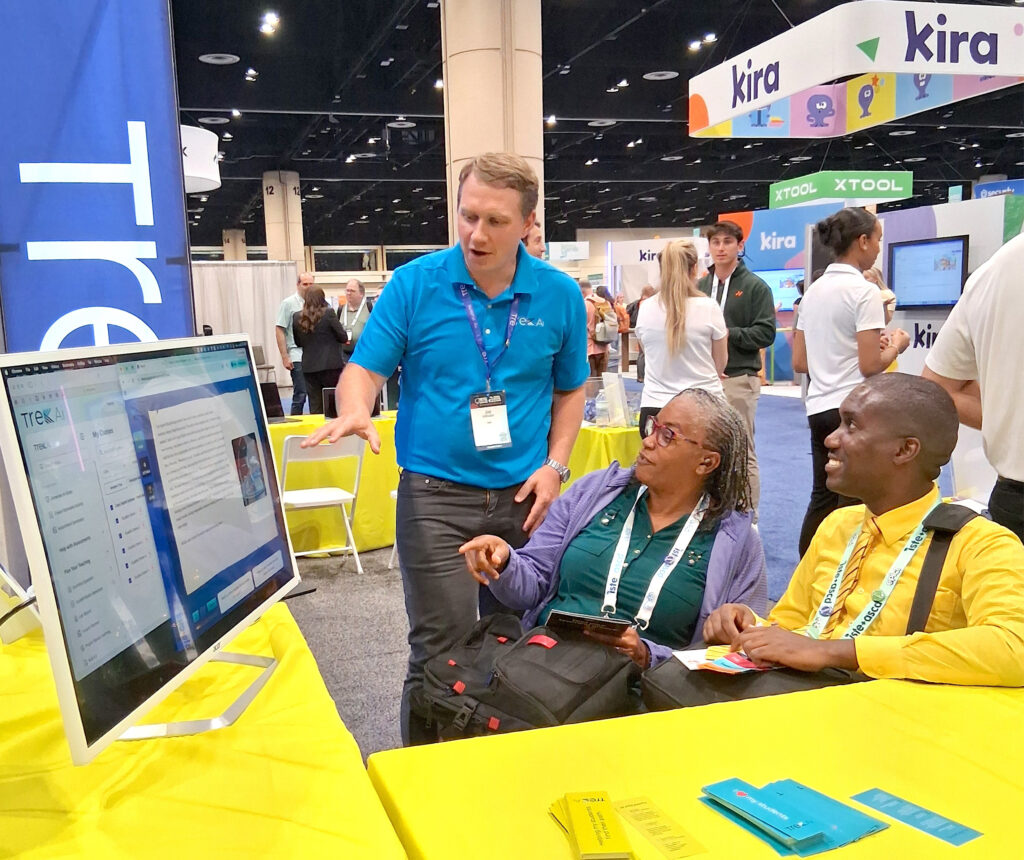
LASCO Awardees explore AI, innovation and new approaches to teaching
Kingston, Jamaica: — As educators across the island prepare for the start of another school year, the usual back-to-school conversations will centre on lesson plans, classroom management, timetables, and ensuring students are ready to learn.
But preparation for a new academic year should also prompt a deeper question: Are we preparing our classrooms for the world our students are entering?
For three of Jamaica’s top educators, the answer is already taking shape.
Fresh from the 2026 ASCD Annual Conference in Orlando, Florida, LASCO Chin Foundation (LCF) awardees for Teacher of the Year Dorette Rhoden-Henry of deCarteret College, TVET Teacher of the Year Gavin DeRizzio of Vauxhall High School, and Principal of the Year Orville Richards of St. Mary Technical High School are returning to their schools with new ideas on technology, artificial intelligence, assessment, leadership and student engagement.
The international professional development experience, which forms part of LCF’s Teacher, TVET Teacher and Principal of the Year award programme, exposed the educators to emerging trends and innovative approaches from education professionals such as Dr Donna Vallese, Instructional Leadership Strategist, and Ted Dintersmith, Innovation Education Advocate, alongside educators and thought leaders from across the world.
For the awardees, the experience reinforced an important lesson: education must continue to evolve.
Bringing AI Into the Classroom
Artificial Intelligence emerged as one of the strongest themes from the conference, with all three educators recognising both its potential and the responsibility that comes with its use.
Richards, who was particularly impressed by sessions on AI integration, plans to make the technology a stronger part of St. Mary Technical High School’s development strategy during the upcoming academic year.
“I am particularly excited about developing a comprehensive AI implementation strategy for St. Mary Technical High School and providing ongoing professional development for teachers in AI integration and digital pedagogy,” the principal stated.
He also plans to increase students’ exposure to emerging technologies while strengthening the school’s STEM and TVET programmes. The school is already building its information and communication technology capabilities through the procurement and installation of additional smart screens.
For Richards, however, AI is not simply about introducing new technology. It is about ensuring educators and students understand how to use it responsibly.
“If I could implement one initiative across Jamaica’s education system tomorrow, it would be a structured national programme/policy for responsible AI integration and AI literacy for teachers and students,” Richards said.
He believes Jamaica schools must equip students with the digital literacy, critical thinking, creativity and ethical decision-making skills needed to navigate an increasingly technology-driven world.
LASCO Teacher of the Year Dorette Rhoden-Henry shares a similar view.
The session that surpassed her expectations was a Microsoft presentation on video editing using Clipchamp, an application which utilises AI and smart tools, which immediately sparked ideas about how technology could be used to make her lessons more interactive. She intends to introduce the students to AI as a learning aid from the beginning of the school year, while teaching them how to use it responsibly.
“I will be teaching my students how to compare different AI tools hence helping them to develop greater critical thinking,” Rhoden-Henry explained.
The objective, she said, is not to allow technology to replace learning, “but to use it to enrich the learning experience while helping students become responsible digital citizens.”
Rhoden-Henry added, “We have to create a very interactive space to enhance student learning. The different methods of integrating technology that I was exposed to at the ASCD conference will help to make my classroom a place where every child is free to experience and express creativity.”
Rethinking How Students Learn
For TVET Teacher of the Year DeRizzio, the conference has prompted him to rethink how he structures projects and assessments.
Already an advocate for project-based learning, he plans to introduce more opportunities for students to analyse problems and develop their own solutions. Rather than telling students exactly what project they will undertake, DeRizzio said he intends “to present them with scenarios and allow them to identify practical solutions before revealing the actual project.”
The approach, he explained, is designed to strengthen critical thinking while encouraging cross-curricular learning. The TVET Teacher of approximately 15 years also believes assessment methods must evolve as educators navigate the increasing use of AI by students. Teachers, he noted, are sometimes challenged to determine whether students genuinely researched and understood an assignment or simply generated a response using AI. His proposed solution is to add elements such as presentations and question-and-answer sessions, giving students an opportunity to demonstrate that they understand the information they have submitted.
“Teachers all over the world face this challenge,” he said. “However, the message of being transformational in our approach as a solution was constant.”
Rather than rejecting AI, DeRizzio believes educators should find ways to ensure that students use it as a tool to support learning, while still demonstrating their own understanding.
Taking Global Lessons Home
While the conference provided exposure to international practices, the awardees also recognised that many of the challenges facing Jamaican educators are shared globally.
Student engagement, teacher recruitment and retention, digital transformation and preparing students for future careers were among the issues that resonated with the Jamaican experience.
For the educators, the lesson was not that Jamaica should simply replicate what is being done elsewhere, but that international ideas can provide useful tools that can then be adapted to local realities.
Highlighting the potential for Jamaica’s creative and innovative talent to be harnessed through education, DeRizzio said the development of STEAM schools in each parish capital could better prepare young people for emerging career opportunities. “These are areas our government has touted — and rightly so — for growing the economy, and I believe these types of facilities will be a game change in that regard,” he said.
Rhoden-Henry, meanwhile, wants the sector to prioritise workshops to help educators understand how technology and AI can be meaningfully incorporated into teaching.
Richards believes a coordinated national approach to AI literacy could help prepare both teachers and students for the changes ahead.
For all three educators, the opportunity to attend ASCD demonstrated why professional development is such an important part of LCF’s award programme. Programmes Manager Anna-Kay McIntosh-Richards, said she was particularly impressed by the awardees’ reports and feedback following the conference, nothing that their reflections confirmed the value of providing educators with opportunities to engage with global perspectives and return with practical ideas for their schools.
“As we prepare for the new school year, it is encouraging to hear how each of the awardees is thinking about applying what they have learned to their respective classrooms and schools. We look forward to seeing how they translate those experiences into meaningful action,” McIntosh-Richards said. “The true value of an experience like ASCD is not simply in attending the conference, but how educators take those lessons home, adapt them to the Jamaican context and use them to improve the learning experience for their students. We are proud to see the awardees returning with the renewed sense of purpose and ideas that can have a tangible impact.”
The ASCD experience is therefore more than a professional development opportunity; it is a catalyst for action. From responsible AI integration and more engaging, critical-thinking-based learning to innovative assessment and stronger leadership practices, each has identified ways to translate global insights into meaning local impact. Their experiences reinforce the important of educators remaining open to learning, adapting to change and continually seeking better ways to serve their students. Ultimately, the value of the conference will be measured not by what they brought home, but by what is put into practice and the difference it makes in the lives of the students.
For more information please contact Carlette DeLeon at 876-383-9768 or email media@breakthroughall.com.